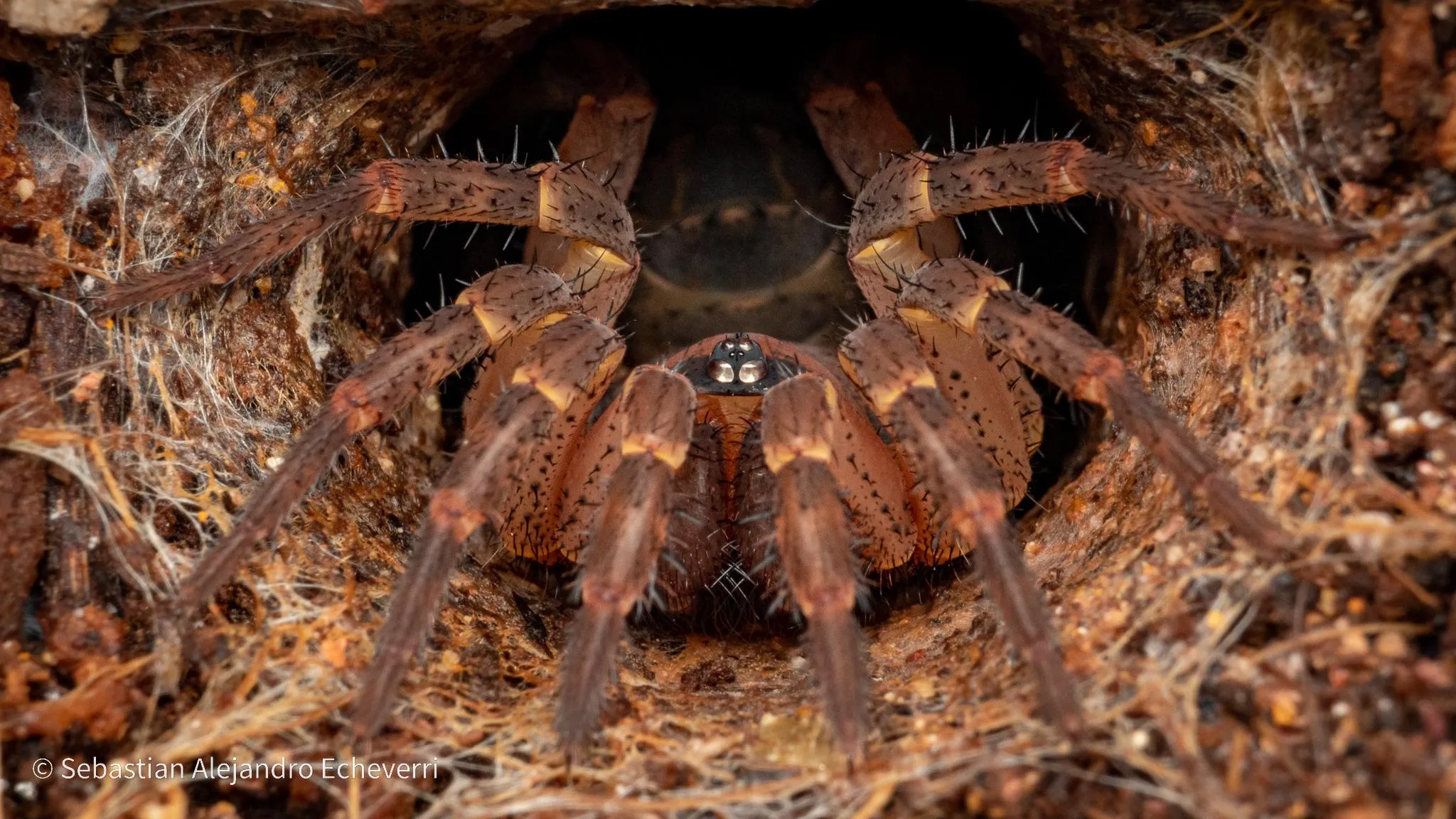
Trapdoor Spiders vs Tarantulas Top 5 Facts
The world of arachnids can be a fascinating yet confusing place, filled with creatures that evoke both curiosity and, for some, a sense of unease. Among these, trapdoor spiders and tarantulas are often mistaken for each other. While both belong to the spider family, they possess distinct characteristics that set them apart. This article aims to clarify the key differences between trapdoor spiders and tarantulas, dispelling common misconceptions and highlighting the unique features of each. By understanding these differences, you can better appreciate the diversity and fascinating adaptations within the spider world.
Fact 1 Are They Related?
The relationship between trapdoor spiders and tarantulas is a crucial aspect of understanding their differences. Both belong to the order Araneae, meaning they are both spiders, sharing fundamental characteristics like eight legs, two body segments (cephalothorax and abdomen), and the ability to spin silk. However, their relationship within the spider family tree diverges. This initial fact is critical, as many believe them to be closer relatives than they are, mainly due to the similarity in appearance and behavior. Their taxonomic classifications differ at the family level, indicating different evolutionary paths and distinct adaptations to their environments.
Taxonomic Classification

Trapdoor spiders typically belong to the family Cyrtaucheniidae or related families, depending on the classification system used, while tarantulas belong to the family Theraphosidae. This difference at the family level underscores a significant evolutionary divergence. Family-level distinctions indicate differences in key biological features, including the structure of their spinnerets, the arrangement of their eyes, and the overall morphology of their bodies. Understanding these family differences helps to place each spider type in its respective place in the animal kingdom.
Shared Characteristics
Despite their differences, trapdoor spiders and tarantulas share fundamental characteristics. Both are arachnids, possessing the general body plan and biological processes unique to spiders. They both use silk for various purposes, including creating webs or lining burrows, and both are predators. They have venom glands to subdue prey, which is essential for survival. These shared features reflect their common ancestry and highlight the evolutionary adaptations that have allowed them to thrive in diverse environments. These shared characteristics are the foundation upon which their unique adaptations have built upon.
Fact 2 Appearance Differences
Physical appearance is one of the most noticeable ways to distinguish trapdoor spiders from tarantulas. These differences go beyond mere aesthetics, often reflecting their different lifestyles and survival strategies. Paying close attention to the size, shape, and coloration can help greatly in quick identification. Furthermore, these morphological differences have a direct correlation with their environment, helping each species survive in its habitat.
Body Size and Shape

Tarantulas are generally larger and more robust than trapdoor spiders. Their bodies tend to be bulkier, with a more pronounced cephalothorax and a larger overall size. Trapdoor spiders, on the other hand, are usually smaller and more compact. Their bodies are often streamlined, an adaptation that allows them to fit snugly within their burrows. The body size and shape are directly related to their respective hunting styles and habitats. Larger tarantulas have more mass and strength for taking down larger prey, while the more compact trapdoor spider can expertly maneuver within its burrow.
Coloration and Features
Coloration varies significantly between trapdoor spiders and tarantulas, though both often exhibit camouflage. Tarantulas come in a wider range of colors, from vibrant blues and oranges to more muted browns and blacks. Their bodies are frequently covered in hairs, which serve sensory and defensive purposes. Trapdoor spiders tend to be less colorful, typically brown or tan, which blends in with their soil environment. They lack the dense covering of hairs found on tarantulas. Moreover, trapdoor spiders have a distinct feature – large, powerful chelicerae (mouthparts) which they use to dig and hold their prey, whilst also acting as the door hinge.
Fact 3 Habitat and Behavior
The habitat and behavior of trapdoor spiders and tarantulas provide key insights into their differences. Their lifestyles, from where they live to how they hunt, showcase their unique adaptations. Trapdoor spiders and tarantulas have different approaches to survival, largely defined by their environmental niches. Knowing their habitats and behavioral traits is a great way to identify these spiders.
Burrowing vs. Roaming

Trapdoor spiders are primarily burrowing spiders, constructing elaborate underground homes with a hinged lid. This lid is camouflaged and allows the spider to ambush prey. Their lifestyle is largely sedentary, waiting for unsuspecting insects to wander too close to the burrow entrance. Tarantulas, while they may also burrow, are more often roaming hunters. Some species live in burrows, but many are active hunters that wander in search of prey. This roaming behavior makes them more visible and, therefore, more easily encountered.
Web vs. No Web
Trapdoor spiders do not build webs in the typical sense. Instead, they use silk to reinforce their burrows and create a trip-line system near the entrance. When an insect triggers the trip-line, the spider quickly emerges to capture its prey. Tarantulas also use silk, but their web-building is typically limited to creating a silken retreat or using it to line burrows, though some species build more elaborate webs. The role of silk differs significantly between these two types of spiders: trapdoor spiders primarily use it for structural purposes, while tarantulas use it for shelter and sometimes as a means of trapping prey.
Fact 4 Venom and Danger
Venom is a crucial tool for both trapdoor spiders and tarantulas, enabling them to subdue prey. However, the potency and effects of their venom differ. Understanding these differences is important for assessing the potential danger to humans. It is important to know that whilst all spiders are venomous, very few pose a serious threat to humans.
Venom Potency

Both trapdoor spiders and tarantulas possess venom, but the potency varies. Tarantulas tend to have a relatively mild venom, which is not typically dangerous to humans. Their venom is used primarily to immobilize their prey, such as insects and small vertebrates. Trapdoor spiders also have venom, which is usually only a little more potent than that of a tarantula. However, individual reactions to spider bites will always vary. Many species can deliver a painful bite, but serious medical complications are rare.
Danger to Humans
The danger posed by both trapdoor spiders and tarantulas to humans is generally low. Bites from both species can cause localized pain, swelling, and discomfort, but serious systemic reactions are extremely rare. The primary concern is usually the bite itself, as their chelicerae can be quite large and capable of delivering a painful bite. However, unlike some other spider species, neither trapdoor spiders nor tarantulas are considered to have venom that poses a significant medical threat to human health.
Fact 5 Evolutionary History
The evolutionary history of trapdoor spiders and tarantulas is marked by distinct paths and adaptations. Studying the evolutionary divergence helps to clarify their differences. Understanding the evolutionary relationships between these spiders provides important information, which is essential in identifying the differences.
Spider Evolution

Spiders have a long and complex evolutionary history, with the earliest spiders dating back millions of years. The order Araneae has diversified, resulting in the evolution of numerous families and genera, each with unique adaptations. This evolutionary tree shows how spiders, including trapdoor spiders and tarantulas, have adapted and evolved over time. From their earliest ancestors, spiders developed venom, silk, and other features that have allowed them to thrive in a multitude of environments, developing into the diverse array of species we see today.
Divergence of Species
The divergence of trapdoor spiders and tarantulas occurred over time, with each group evolving unique characteristics suited to their environment. This divergence is apparent in their differing body plans, hunting strategies, and habitats. Trapdoor spiders evolved to be ambush predators, utilizing burrows and trapdoors to capture prey, while tarantulas evolved to be more mobile hunters. The evolutionary split between them demonstrates the adaptability of spiders. This divergence underscores the independent evolution of each group and their success in different ecological niches.
Conclusion
In conclusion, while trapdoor spiders and tarantulas share the basic characteristics of spiders, they are distinct creatures with unique adaptations and evolutionary histories. From their taxonomic classifications to their physical appearances, habitats, and behaviors, these two groups of spiders demonstrate remarkable differences. Understanding these distinctions not only enhances our appreciation for the diversity within the spider world, but it also helps dispel the common misconceptions that often surround these fascinating arachnids. Next time you encounter a spider, take a moment to observe its features and consider whether you’re looking at a trapdoor spider or a tarantula - the differences are often more captivating than the similarities.