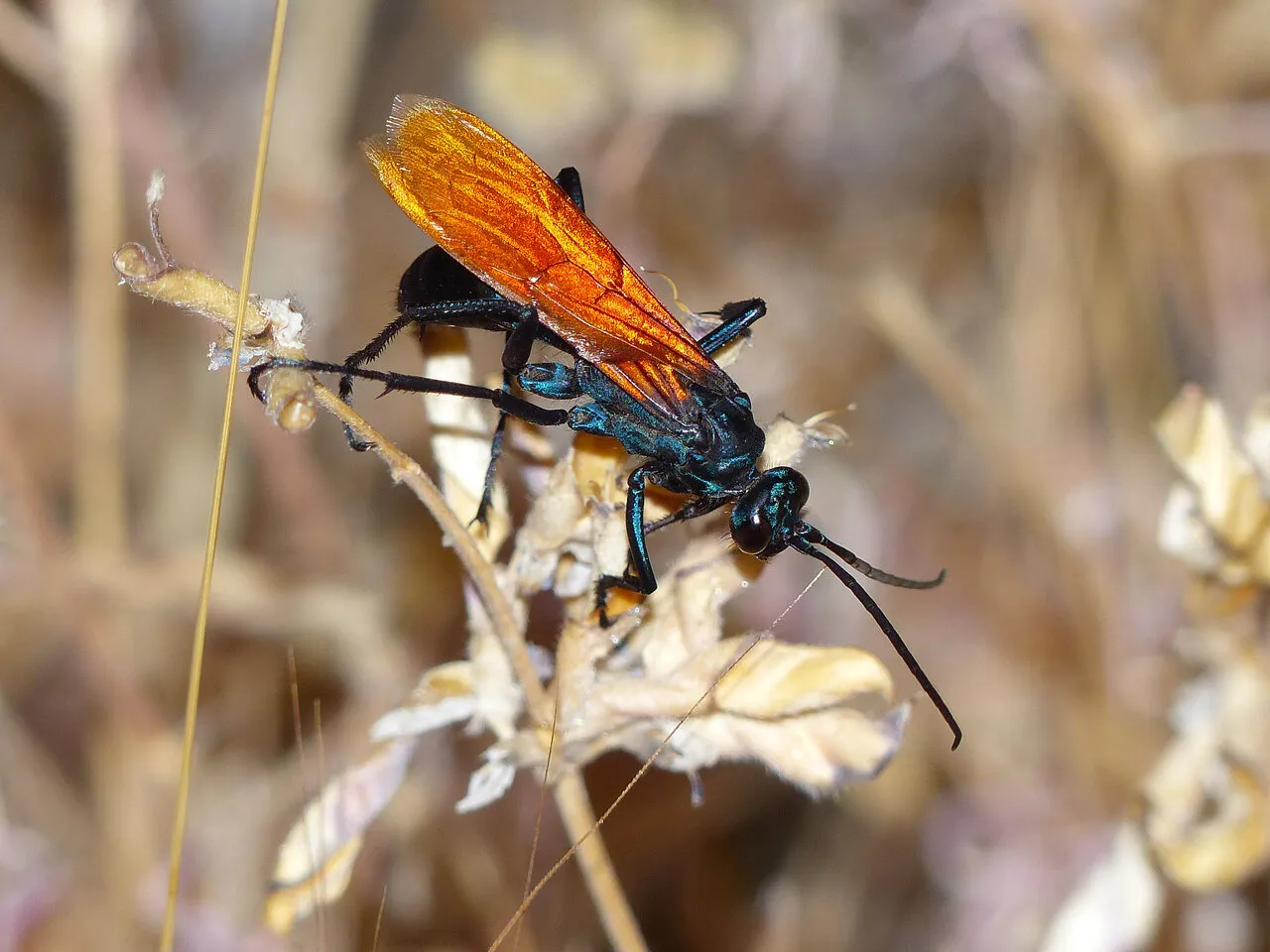
What is a Tarantula Hawk Wasp?
The Tarantula Hawk Wasp, a formidable insect found in Florida, is not your average wasp. These impressive creatures are among the largest wasps in the world, recognized for their striking appearance and, notably, their excruciatingly painful sting. Their primary purpose is far from gentle; they are predators of tarantulas, using their potent sting to paralyze these large spiders before dragging them to their nests as a food source for their larvae. This unique behavior has earned them both fascination and respect from entomologists and nature enthusiasts alike. This wasp is a testament to nature’s intricate and sometimes brutal beauty, a fascinating subject for anyone interested in the diverse wildlife of Florida.
Appearance and Identification
Identifying a Tarantula Hawk Wasp in Florida is relatively straightforward, owing to its distinctive features. They are typically large, with bodies that can reach up to two inches in length, making them stand out compared to other wasps. Their appearance combines a black or dark blue body with vibrant orange or rust-colored wings. These wings allow them to fly with considerable speed and agility, a necessity when hunting their spider prey. The contrasting colors serve as a warning signal, advertising their potent sting to potential predators. Observing these wasps in their natural habitat is an experience, although one should maintain a respectful distance given their stinging capabilities.
Size and Distinctive Features

As mentioned, their considerable size is one of the most striking features. The females, which are larger than the males, possess a long, curved stinger used to paralyze tarantulas. Their legs are also quite long, designed to help them carry their massive prey. Their antennae are prominent and sensitive, used to detect prey and navigate their environment. The overall build of the Tarantula Hawk Wasp speaks of strength and purpose, perfectly adapted for their predatory lifestyle. Their physical characteristics are key to understanding their role in the ecosystem and the challenges they face.
Coloration Variations
While the most common coloration involves a black body and orange wings, variations do exist. Some may exhibit different shades of orange, or their wings may have a reddish hue. Body color can also differ, with some wasps showing dark blue or even metallic-looking bodies. This variance can be due to geographical location, diet, or even genetic factors. Regardless of the specific color pattern, the combination of a dark body and bright wings is a key identifier. These colorations also serve a warning function, alerting other creatures to their potential danger.
Habitat and Distribution
Tarantula Hawk Wasps have a wide distribution, particularly in warmer regions. In Florida, they are commonly found due to the state’s favorable climate and the presence of their primary prey, tarantulas. They prefer habitats that offer both sunshine and suitable ground for nesting, such as open fields, sandy areas, and the edges of woodlands. The wasp’s range extends across the southern United States and into parts of South America. Understanding their habitat preferences is essential for anyone interested in observing or studying these fascinating insects.
Where They Are Found in Florida

In Florida, Tarantula Hawk Wasps are widespread. They are found throughout the state, from the panhandle to the Keys. Areas with ample sunshine and sandy soil are particularly attractive to them. You might spot them in natural areas, parks, and even suburban gardens. However, they are not typically found in densely populated urban centers or heavily forested areas. While encountering them is possible anywhere in Florida, their presence is more noticeable in regions with a high concentration of tarantulas, their primary food source. Therefore, if you are looking for these wasps, you may want to try areas where the tarantulas thrive.
Preferred Habitats
Tarantula Hawk Wasps favor warm, dry environments with plenty of sunlight. They are often seen in open areas, such as scrublands, grasslands, and deserts. These habitats provide the right conditions for both nesting and hunting. They require sandy or loamy soil for their nests, where they will lay their eggs. These wasps are also attracted to areas with flowers, as they feed on nectar. The availability of tarantulas is also essential, as they depend on them as food for their larvae. This combination of factors defines their preferred habitat and allows the wasp to thrive.
Hunting and Diet
The Tarantula Hawk Wasp is a specialist predator, with a diet that mainly consists of tarantulas. The female wasps are the primary hunters, using their powerful sting to paralyze the spiders. Once paralyzed, they drag the tarantula to their nest, where they lay an egg on it. The wasp larva then hatches and feeds on the spider, consuming it alive. The adult wasps also feed on nectar, which provides them with energy. This specialized diet and predatory behavior are essential for their survival and role in the ecosystem.
Preying on Tarantulas

The process of hunting a tarantula is a remarkable display of predatory skill. The female wasp will seek out tarantulas, often in their burrows or hiding places. They approach the spider cautiously, then deliver a sting that paralyzes the tarantula. The wasp stings the spider in a precise location, such as a nerve center, to immobilize it. After the tarantula is paralyzed, the wasp carefully carries it, sometimes over a long distance, to their prepared nest. This hunt is a vivid example of the wasp’s strength and determination, making it an intriguing yet formidable hunter.
The Sting and Its Impact
The sting of the Tarantula Hawk Wasp is notorious for its extreme pain. While not usually fatal to humans, the pain is intense and can last for several minutes. The sting is described as one of the most painful insect stings in the world, often compared to a bolt of electricity. The pain is not the only effect; the sting can also cause temporary paralysis and swelling. It is essential to avoid provoking these wasps to prevent being stung. They are generally not aggressive unless threatened, but the pain is unforgettable.
The Pain Scale of the Sting
The Schmidt Sting Pain Index is a scale that rates the relative pain of insect stings, and the Tarantula Hawk Wasp rates at the top, a level 4, the highest possible rating. This index, developed by entomologist Justin O. Schmidt, ranks insect stings based on the intensity of the pain experienced. The Tarantula Hawk Wasp is known for delivering a sting that is intensely painful, with a sharp, immediate impact. The pain is often described as excruciating, and those who have experienced it tend to remember it vividly. The Schmidt Sting Pain Index highlights the potent nature of this wasp’s sting.
First Aid and Treatment

If stung by a Tarantula Hawk Wasp, the first step is to remain calm. While the pain is intense, it is not typically life-threatening. The recommended treatment focuses on symptom relief. Applying ice packs can help reduce swelling and pain. It is also helpful to elevate the affected area. Over-the-counter pain relievers, such as ibuprofen or acetaminophen, can provide some relief from the pain. Monitor for any signs of an allergic reaction, such as difficulty breathing or swelling of the face or throat, and seek immediate medical attention if necessary. The most important thing is to stay calm and manage the pain until it subsides. Thankfully, the pain is temporary, and the venom is not particularly toxic.
Life Cycle and Behavior
The life cycle of the Tarantula Hawk Wasp is a fascinating process of transformation. The wasp’s life begins as an egg laid on a paralyzed tarantula. The larva hatches and feeds on the spider, eventually developing into a pupa within the spider’s body. After a period, the adult wasp emerges from the pupa, ready to begin the cycle again. Their behavior is also interesting, with males primarily focused on mating and the females dedicated to hunting and nesting. Understanding their life cycle provides insight into their survival strategies and their role in the ecosystem.
Nesting Habits
Tarantula Hawk Wasps build their nests in the ground, usually in sandy soil. The female wasp digs a burrow, sometimes several inches deep. She then hunts for a tarantula, paralyzes it, and drags it into the burrow. There, she lays a single egg on the spider’s abdomen. The wasp larva hatches and feeds on the live tarantula, eventually pupating within the spider’s body. Once the larva is fully grown, it transforms into a pupa. The adult wasp then emerges from the pupa to repeat the cycle. The nesting habits are unique to the wasp and are a testament to its strength and tenacity.
Interesting Behaviors

Beyond their hunting prowess, Tarantula Hawk Wasps exhibit several interesting behaviors. Males are known to patrol specific areas, searching for potential mates. They are often seen perched on plants or rocks, waiting for females to appear. The females, on the other hand, demonstrate incredible dedication to their offspring, carefully preparing nests and providing food. They also demonstrate complex behaviors related to tarantula hunting, including using their antennae to locate and assess potential prey. These behaviors display how well these insects have adapted to their environment.
Conservation Status
The conservation status of the Tarantula Hawk Wasp is generally considered to be of Least Concern. This means that their populations are relatively stable, and they are not facing any immediate threats to their survival. However, habitat loss and pesticide use could impact their numbers. It is important to monitor their populations and habitats to ensure their long-term survival. With the growing awareness of their importance in the ecosystem, there’s an increasing effort to protect them. Protecting these wasps is crucial to maintaining biodiversity and natural ecological balance.
Threats to the Wasp
Although the Tarantula Hawk Wasp has a relatively stable population, they are still susceptible to threats. Habitat destruction, such as the clearing of land for development and agriculture, can reduce their nesting sites and hunting grounds. The use of pesticides can also impact their populations, as these chemicals can kill their prey (tarantulas) and the wasps themselves. Climate change could also pose a threat, as changing weather patterns can affect their habitats and food sources. Ongoing monitoring and conservation efforts are crucial to mitigate these threats and safeguard their survival.
Ways to Help

Supporting the conservation of Tarantula Hawk Wasps can be done in several ways. One of the most effective is to support habitat preservation. This can involve supporting organizations dedicated to protecting natural areas where these wasps live. Avoiding the use of pesticides in your garden and surrounding areas can help protect their prey and the wasps themselves. Educating others about these fascinating insects and their importance can also make a difference. Spreading awareness of their role in the ecosystem and the need to protect them is a valuable contribution to their conservation.