Tarantula Feeding How to [Ultimate Guide]
Caring for a tarantula involves understanding its feeding habits. This guide provides a comprehensive overview of tarantula dietary needs, from selecting the right prey to troubleshooting common feeding problems. Providing proper nutrition and care is essential for the health and longevity of your pet tarantula. This information will help you ensure your tarantula thrives in your care, covering everything from the types of food to offer, the frequency of feeding, and how to address potential issues.
Understanding Tarantula Dietary Needs
Tarantulas are primarily insectivores, meaning their diet consists mainly of insects. They also consume other invertebrates in the wild. The nutritional requirements of a tarantula vary depending on its life stage, size, and species. A well-balanced diet is crucial for their growth, molting, and overall well-being. Therefore, understanding what a tarantula naturally eats and the factors that influence its feeding schedule is fundamental to its proper care. This ensures they receive the necessary nutrients to thrive in a captive environment.
The Natural Diet of Tarantulas

In their natural habitat, tarantulas are opportunistic predators. Their diet includes various insects, such as crickets, grasshoppers, cockroaches, beetles, and sometimes even small vertebrates like small lizards or mice, particularly for larger species. The specific prey depends on the tarantula’s size, the environment, and the availability of food. Understanding their natural diet helps replicate these conditions in captivity, offering a variety of prey to ensure they receive a balanced intake of nutrients, which is vital for their health and vitality. Image tarantula-eating-cricket.webp
Factors Influencing Feeding Frequency
Several factors affect how often you should feed your tarantula. These include the tarantula’s age, size, and metabolism. Young tarantulas, or slings, require more frequent feeding compared to adults. Their rapid growth necessitates a higher intake of nutrients. The temperature of the enclosure also plays a role, as warmer temperatures can increase the tarantula’s metabolism, thus increasing its appetite. Similarly, the species of tarantula can influence feeding habits; some species are naturally more voracious eaters than others. Observe your tarantula’s behavior and adjust the feeding schedule accordingly to maintain its health.
Selecting the Right Prey for Your Tarantula
Choosing the right prey is vital for your tarantula’s health. Ensure that the insects you provide are safe and nutritious. Avoid feeding tarantulas insects collected from the wild, as they may carry parasites or have been exposed to pesticides. Always purchase feeder insects from a reputable source. Variety in the diet can also benefit tarantulas. Rotate different types of insects to provide a range of nutrients. This ensures your tarantula receives a balanced diet and avoids nutritional deficiencies. Image tarantula-prey-size.webp
Choosing Insects and Other Food Items

Crickets, mealworms, and dubia roaches are common and readily available feeder insects. Crickets are a good staple, but they can be fast and may hide in the enclosure. Mealworms are easy to handle but may not provide enough nutrients on their own. Dubia roaches are a nutritious option and are easier to manage, as they do not climb smooth surfaces. You can also occasionally offer other items, such as waxworms (as a treat) or pre-killed pinkie mice for larger species. Supplementing the insects’ diet with nutritious food before feeding your tarantula will increase their nutritional value.
Prey Size and Its Importance
The size of the prey should be appropriate for your tarantula’s size. A general rule is to provide insects that are no larger than the tarantula’s abdomen. Feeding prey that is too large can stress the tarantula, making it difficult to handle, and potentially cause injury during a struggle. For slings, smaller prey items, such as pinhead crickets or small mealworms, are ideal. As your tarantula grows, gradually increase the size of the prey. This helps ensure that the tarantula can successfully capture and consume the food without difficulties. Image tarantula-prey-size.webp
Preparing and Handling Prey
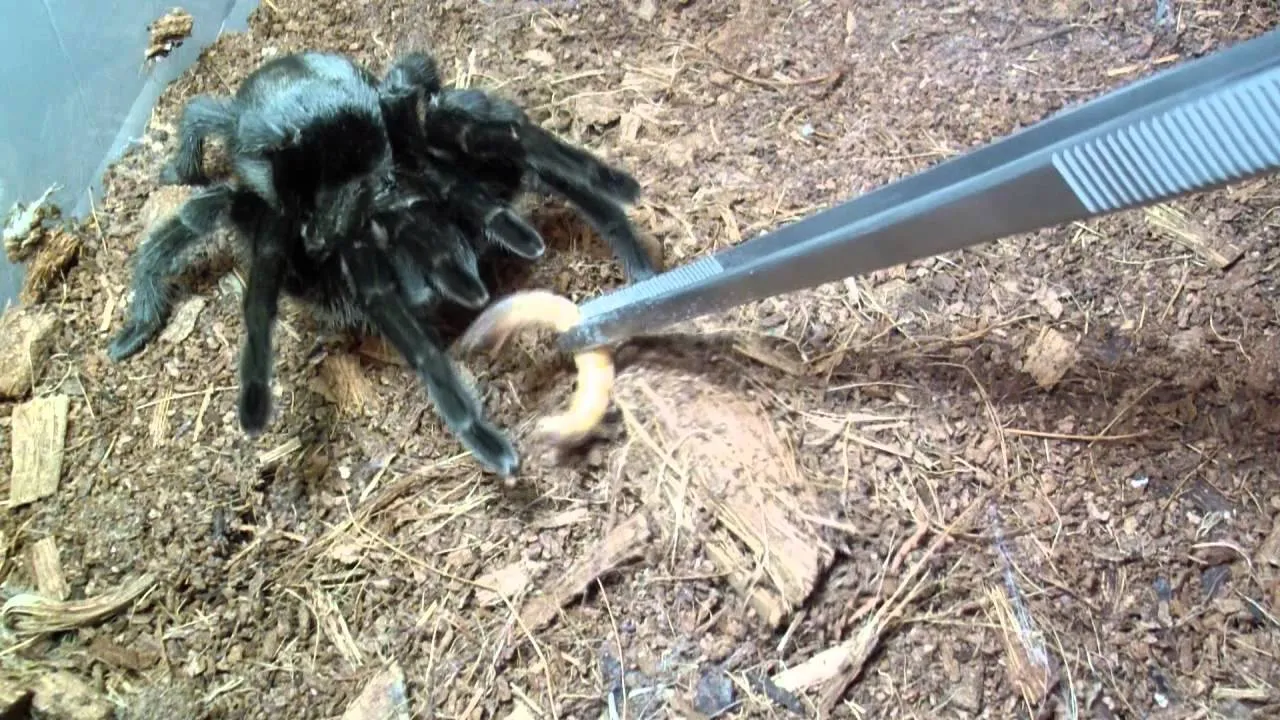
Before feeding, it is advisable to gut-load the feeder insects. Gut-loading involves feeding the insects nutritious foods like vegetables, fruits, and commercial insect food for at least 24 hours before offering them to your tarantula. This increases the nutritional value of the prey, providing your tarantula with essential vitamins and minerals. Handle the prey with care. Use tongs or tweezers to avoid direct contact with the tarantula, as it may perceive your hand as a threat. This also minimizes the risk of being bitten by the insect if it is still alive. Image tarantula-feeding-guide.webp
How to Offer Food to Your Tarantula

To feed your tarantula, gently place the prey near the tarantula, preferably using tongs or tweezers. This prevents the insect from escaping and allows the tarantula to easily access the food. Observe your tarantula’s behavior. Some tarantulas may take a few minutes to react, while others will strike immediately. If the tarantula doesn’t show interest, you can try again later or remove the prey. Be patient, and avoid overfeeding. The tarantula will eat when it is hungry. Monitor the tarantula’s feeding habits to adjust the feeding schedule as needed.
Removing Uneaten Prey
It is important to remove uneaten prey within 24 hours. Leftover insects can stress the tarantula, potentially bite it during molting, or even carry parasites. Regularly check the enclosure for uneaten food. Use tongs to remove the prey, being careful not to disturb the tarantula if it is in a vulnerable position. Maintaining a clean environment is crucial for the health of your tarantula, and prompt removal of uneaten prey prevents the build-up of waste and reduces the risk of contamination. This keeps the enclosure clean and prevents any potential harm to the tarantula.
Feeding Frequency and Amount
The feeding frequency depends on the tarantula’s age, species, and metabolism. Observe your tarantula to determine its feeding needs. Young tarantulas, or slings, typically require more frequent feeding, around every 2-3 days, while adults may only need to be fed once a week or even less often. Providing too much food can lead to obesity, while not enough can cause stress and slow growth. Adjust the amount and frequency based on your tarantula’s appetite and body condition. The goal is to strike a balance that supports healthy growth and longevity. Image tarantula-adult-feeding.webp
Feeding Slings

Slings, or baby tarantulas, have a high metabolism and need frequent feeding. Feed slings every 2-3 days, providing small prey items like pinhead crickets or pre-killed mealworms. Ensure the prey is appropriately sized and easy for the sling to capture and consume. Observe the sling’s behavior to determine its appetite. If it readily eats the offered prey, increase the amount slightly. Avoid overfeeding, as slings are vulnerable and can be stressed by a large amount of food. Proper feeding is critical during this stage. Image tarantula-sling-feeding.webp
Feeding Sub-Adults and Adults
Sub-adult and adult tarantulas can be fed less frequently, usually once a week or every other week. The frequency depends on their species and individual appetite. Larger tarantulas can handle larger prey items. Monitor your tarantula’s abdomen; a well-fed tarantula will have a rounded abdomen. Adjust the amount of food based on their appetite and body condition. If your tarantula refuses food, it could be a sign of an impending molt or a problem with the enclosure conditions. Regularly assess their overall health and adjust the feeding schedule. Image tarantula-adult-feeding.webp
Troubleshooting Common Feeding Problems
Even with the best care, tarantulas can sometimes experience feeding problems. Recognizing these issues and knowing how to address them is essential for their well-being. Common problems include refusing food, overfeeding, and ensuring proper hydration. Being able to identify and solve these issues will contribute to the tarantula’s health. Careful observation and a proactive approach are crucial for maintaining the well-being of your tarantula.
Tarantula Refusing Food

A tarantula may refuse food for several reasons. One common reason is an impending molt. During this time, the tarantula stops eating and may become reclusive. Another reason is stress from environmental conditions, such as a temperature that’s too cold or too warm. Ensure the enclosure has proper temperature and humidity levels. Also, tarantulas may refuse food if they are not hungry or if the prey is too large. If the tarantula continues to refuse food for an extended period, consult with an experienced tarantula keeper or a veterinarian for advice. Image tarantula-refusing-food.webp
Overfeeding and Its Consequences
Overfeeding a tarantula can lead to obesity, which can affect its ability to molt properly and may shorten its lifespan. A tarantula with a very large abdomen is likely overfed. Adjust the feeding schedule and reduce the amount of food if you suspect overfeeding. Some tarantulas may also become less active and lose their appetite for a while. It’s always better to err on the side of underfeeding rather than overfeeding. Watch your tarantula’s body condition to ensure it stays healthy and active. Adjust the frequency of feedings as needed to promote a healthy weight.
Hydration and Water
Providing access to fresh water is essential for your tarantula’s health. Hydration is a fundamental need. This can be achieved by providing a water dish and maintaining proper humidity levels in the enclosure. Clean water and the right humidity conditions are vital for the tarantula’s well-being. Monitoring these conditions is essential. Image tarantula-water-dish.webp
Providing Fresh Water

Always provide a shallow water dish in the tarantula’s enclosure. Ensure the water dish is not too deep, especially for slings, to prevent them from drowning. Fill the water dish with fresh, clean water and replace it regularly, typically every 1-2 days, to avoid bacterial growth. The water dish should be easily accessible to the tarantula. Consider using a water dish that is appropriate for the size of your tarantula. Ensure that the dish is stable and won’t tip over, potentially harming your tarantula. Image tarantula-water-dish.webp
Maintaining Humidity Levels
Maintaining the appropriate humidity levels is crucial for your tarantula’s health and molting process. The required humidity level varies by species, so research the specific needs of your tarantula. Use a hygrometer to monitor the humidity levels in the enclosure. Mist the enclosure with water, if needed, to increase humidity. Ensure that the enclosure has adequate ventilation to prevent mold growth. Providing the correct humidity and temperature is essential for maintaining a healthy environment. Image tarantula-humidity.webp