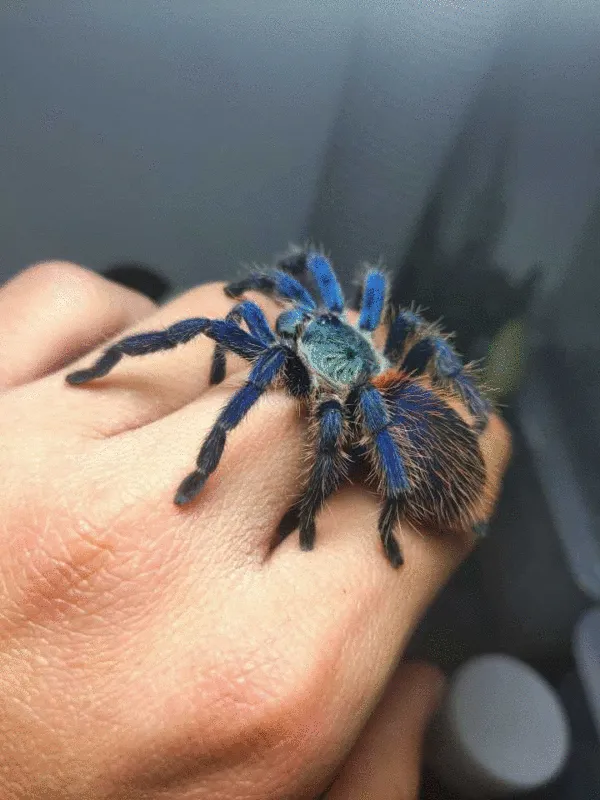
Understanding the Brazilian Blue Velvet Tarantula
The Brazilian Blue Velvet Tarantula ( Chromatopelma cyaneopubescens ), also known as the Greenbottle Blue Tarantula or GBB, is a captivating and popular tarantula species among hobbyists. Despite its common name, this tarantula is not native to Brazil, it’s origins are in Venezuela. Its vibrant coloration, docile temperament, and manageable size make it an appealing choice for both novice and experienced keepers. This guide will provide a comprehensive overview of how to care for your Brazilian Blue Velvet Tarantula, ensuring its health, well-being, and longevity. From habitat setup to feeding and handling, we’ll cover everything you need to know to provide the best possible care for this beautiful arachnid. Understanding the specific needs of this species is crucial for its survival in captivity. This care guide will act as a detailed resource for all aspects of Brazilian Blue Velvet Tarantula husbandry.
Origin and Habitat of Blue Velvet Tarantulas
The Brazilian Blue Velvet Tarantula, as mentioned, is not actually from Brazil; it originates from the coastal regions of Venezuela. They are primarily terrestrial tarantulas, which means they spend most of their time on the ground. These tarantulas inhabit arid and semi-arid environments. This understanding of its natural environment is fundamental to replicating the appropriate conditions in captivity. Providing the right environment is key to their health and overall happiness. Recreating the natural habitat of your tarantula helps to reduce stress and encourages natural behaviors, such as burrowing and web-spinning. The correct environment also assists in the tarantula’s molting process. To simulate the natural habitat, you need to understand what conditions are like in the wild.
Natural Environment

In their natural habitat, Brazilian Blue Velvet Tarantulas dwell in burrows or under rocks, where they find shelter from the sun and predators. The environment is typically warm and dry, with relatively low humidity. The spiders often weave webs around their burrow entrances to catch prey and create a protective barrier. These tarantulas are opportunistic hunters, feeding on insects and other invertebrates that they can overpower. The terrain is rocky and sandy, providing ideal conditions for burrowing. When you set up a habitat, you will try to replicate these conditions as closely as possible, to mimic its natural environment. By understanding the natural environment, you can effectively provide a comfortable, safe, and healthy environment for your tarantula.
Ideal Housing Setup for Your Tarantula
Creating the right enclosure for your Brazilian Blue Velvet Tarantula is essential for its well-being. The enclosure should provide adequate space, suitable substrate, and the correct temperature and humidity levels. The proper setup not only caters to the tarantula’s physical needs but also contributes to its psychological well-being by mimicking its natural environment. A well-designed enclosure allows the tarantula to exhibit natural behaviors, such as burrowing and web-spinning, which are vital for its overall health and happiness. Choosing the right housing setup is one of the most important steps to take when acquiring this tarantula.
Enclosure Size and Type
For adult Brazilian Blue Velvet Tarantulas, an enclosure of approximately 10-gallon or larger is recommended. A glass terrarium or a plastic enclosure with good ventilation is suitable. The enclosure should have a secure lid to prevent the tarantula from escaping. The size of the enclosure should be proportional to the size of the tarantula, allowing it ample space to move around and establish a territory. Avoid enclosures that are too large, as this can make it harder for the tarantula to find food and regulate its environment. The best type of enclosure will have good ventilation and allow you to control the temperature and humidity easily. Proper ventilation will help prevent mold and mildew from growing in the enclosure. The enclosure must also be escape-proof; these spiders are fast and can squeeze through small openings.
Substrate and Decor

The substrate should be several inches deep to allow for burrowing. A mixture of peat moss, coconut fiber, and vermiculite is ideal, as it retains moisture well while providing good drainage. Avoid using soil that contains fertilizers or pesticides. Decorate the enclosure with a hide, such as a piece of cork bark or a hollow log, to provide a secure retreat. Add some artificial plants or decorations to mimic the tarantula’s natural environment, but avoid anything sharp or that could potentially harm the tarantula. The substrate helps to maintain the humidity level in the enclosure. The hide provides the tarantula with a safe space to retreat to. The decorations should be placed in a way that allows the tarantula to move around freely.
Temperature and Humidity Control
Brazilian Blue Velvet Tarantulas thrive in temperatures between 75°F and 85°F (24°C - 29°C). Use a heat mat or a ceramic heat emitter to maintain this temperature if necessary, but always ensure that the heat source is not directly in contact with the enclosure. Humidity levels should be kept between 60-70%. You can monitor the humidity with a hygrometer. To maintain the proper humidity level, lightly mist the enclosure with water every few days, or provide a shallow water dish. Avoid over-misting, as this can lead to mold growth. Proper temperature and humidity are crucial for your tarantula’s health, assisting with the molting process and overall well-being. If you are having difficulty maintaining the correct humidity, you can add more substrate or mist more frequently. Avoid placing the enclosure in direct sunlight, as this can cause it to overheat.
Feeding and Hydration
Proper feeding and hydration are critical components of your Brazilian Blue Velvet Tarantula’s care. Providing a balanced diet and access to fresh water ensures that your tarantula remains healthy and active. The feeding schedule and types of food you offer will influence its growth, energy levels, and overall health. Remember that tarantulas are not heavy eaters. Understanding their dietary needs and hydration requirements will help you create a thriving environment for your pet. The right nutrients are essential for supporting healthy growth, molting, and other biological processes. Water is also essential and must always be available.
What to Feed Your Blue Velvet Tarantula

The Brazilian Blue Velvet Tarantula is an opportunistic predator and will eat a variety of insects. Suitable food items include crickets, mealworms, dubia roaches, and other commercially available insects. The insects should be gut-loaded with nutritious food before being offered to your tarantula. This helps ensure that the tarantula receives the necessary vitamins and minerals. Avoid feeding your tarantula insects that have been exposed to pesticides. It’s always best to provide your tarantula with a varied diet to meet all nutritional needs. The insects should be approximately the same size as the tarantula’s abdomen, and always remove any uneaten food within 24 hours to prevent mold growth.
Feeding Frequency
The feeding frequency depends on the tarantula’s age and size. Spiderlings should be fed 2-3 times per week. Sub-adults can be fed once or twice a week. Adults can be fed every 1-2 weeks, depending on their appetite and activity level. Observe your tarantula’s abdomen; if it appears plump, you can reduce the feeding frequency. If it looks thin, you might need to feed it more often. Overfeeding can lead to health problems, so be mindful of the amount and frequency of feeding. Adjust the feeding schedule based on your tarantula’s molting cycle. Tarantulas typically stop eating a week or two before they molt. After molting, wait a few days before feeding, as the new exoskeleton is still hardening.
Watering and Hydration
Always provide your tarantula with access to fresh, clean water. A shallow water dish, filled with dechlorinated water, is essential. Regularly clean and refill the water dish to prevent bacterial growth. In addition to the water dish, you can mist the enclosure lightly with water every few days to maintain humidity. The frequency of misting will depend on the humidity levels in your home and the enclosure. Ensure the water dish is shallow enough to prevent the tarantula from drowning. If the tarantula is about to molt, be sure to keep the humidity a bit higher during the molting process. Dechlorinated water is essential to prevent the spider from being exposed to harmful chemicals.
Handling and Safety Precautions

While Brazilian Blue Velvet Tarantulas are generally considered docile, it’s essential to handle them with caution. Handling should be kept to a minimum to avoid stressing the tarantula. If you do need to handle your tarantula, always do so over a soft surface, such as a bed or a carpet, in case it falls. Understanding how to handle your tarantula safely, and recognizing when it’s best to leave it undisturbed, is crucial for both your safety and the tarantula’s well-being. Remember that tarantulas are fragile creatures, and a fall from even a short distance can be fatal. The correct procedure also reduces the risk of being bitten or being exposed to the tarantula’s urticating hairs.
Safe Handling Practices
If you choose to handle your Brazilian Blue Velvet Tarantula, do so gently and slowly. Use a soft brush or a similar tool to gently encourage the tarantula onto your hand. Avoid sudden movements or loud noises that could startle the tarantula. Handle the tarantula close to the ground or over a soft surface to minimize the risk of injury if it falls. Always wash your hands before and after handling your tarantula to prevent the spread of germs. Never try to grab or force the tarantula; let it move at its own pace. If the tarantula seems agitated or stressed, it’s best to leave it alone. Frequent or unnecessary handling can stress the spider. It’s best to admire them from a safe distance.
Recognizing Stress Signals
Learn to recognize the signs of stress in your Brazilian Blue Velvet Tarantula. These can include rearing up, flicking hairs (urticating hairs), or a defensive posture. If your tarantula displays these behaviors, it’s best to leave it alone and avoid handling it. Rapid movements, stridulation (hissing sound), and a raised abdomen are other indicators of stress. Urticating hairs are a defense mechanism used by tarantulas to deter predators, and they can cause skin irritation. If the tarantula appears agitated, it may be trying to tell you something. Recognizing the signs of stress helps you to take the necessary precautions to avoid any issues with the tarantula and ensures its health and comfort. Be observant when you are around your tarantula, and learn its personality so that you can easily spot if it is not doing well.
Common Health Issues and Care

Like all pets, Brazilian Blue Velvet Tarantulas can be susceptible to certain health issues. Knowing how to identify and address these problems is crucial for providing proper care. From recognizing the signs of illness to understanding the molting process, this section provides insights into maintaining the health of your tarantula. Regular observation, a clean environment, and a balanced diet are all vital components of preventative care. Always consult with a veterinarian who specializes in exotic animals if you suspect your tarantula is sick. It’s always a good idea to know as much as possible about how to care for your pet so that you can give it the best possible care.
Moulting Process
Moulting is a natural process where tarantulas shed their exoskeleton to grow. Before moulting, your tarantula may stop eating, become lethargic, and may turn over on its back. Provide a humid environment during moulting to help prevent the exoskeleton from drying out. Do not disturb your tarantula while it is moulting, and avoid handling it until the new exoskeleton has fully hardened. After moulting, the tarantula will be vulnerable, so avoid touching it until its fangs have fully hardened. It can take several days for the exoskeleton to harden completely. The molting process is a sign of healthy growth. The tarantula can increase in size during the process.
Identifying and Treating Diseases
While Brazilian Blue Velvet Tarantulas are generally hardy, they can sometimes suffer from health issues. Common problems include mites, fungal infections, and injuries. Regularly inspect your tarantula for any signs of illness, such as lethargy, loss of appetite, or unusual behavior. If you suspect a problem, isolate the tarantula and consult with a veterinarian who specializes in exotic animals. Ensure that the enclosure is clean and properly maintained to prevent health problems. Proper diet, appropriate temperature, and humidity levels are essential for preventing diseases. Preventing diseases will help ensure your tarantula lives a long and healthy life. A healthy environment will greatly assist in preventing any issues that may occur with your tarantula.
Breeding and Reproduction

Breeding Brazilian Blue Velvet Tarantulas is a fascinating aspect of tarantula keeping, but it requires careful preparation and knowledge. It is also important to know that breeding tarantulas takes a lot of time and patience. The process can be complex, and it is essential to understand the specific needs of the species. This section will provide you with a basic understanding of the mating process and the care of the egg sac and spiderlings. Breeding tarantulas at home is not always possible. If you do not have the resources to house the spiderlings, it is best to leave the breeding to the professionals. If you are thinking about breeding tarantulas, do your research first!
Mating Process
To breed Brazilian Blue Velvet Tarantulas, you will need a mature male and female. The male will typically create a sperm web, which he uses to store his sperm. He then transfers the sperm to his pedipalps. The female should be well-fed and receptive. Introduce the male to the female’s enclosure and monitor their behavior closely. Mating can be a delicate process, and the female may attempt to eat the male if she is not receptive. If successful, the female will lay eggs and create an egg sac, which she will fiercely protect. Do your research to ensure a successful mating. Keep a close watch on the tarantulas throughout the mating process, and be prepared to separate them if needed. You will also want to have separate enclosures available to house the spiderlings after they hatch.
Egg Sac and Spiderling Care
The female will typically guard the egg sac for several weeks. It is essential to maintain proper temperature and humidity levels during this time. After the eggs hatch, the spiderlings will remain in the egg sac for a period. Once the spiderlings emerge, they will need to be separated into individual enclosures to prevent cannibalism. Provide the spiderlings with small prey, such as fruit flies or pinhead crickets. Care for the spiderlings is labor-intensive. You will need to provide small enclosures, and feed them frequently. Make sure that you are ready and willing to take on the responsibility before breeding. Spiderlings are very delicate, so any issues will cause them to die. If you are not experienced in breeding, it’s always best to allow an expert to do the breeding.
Final Thoughts
Caring for a Brazilian Blue Velvet Tarantula can be a rewarding experience. These striking arachnids offer a unique and fascinating addition to any home. By following the care guidelines outlined in this guide, you can ensure that your tarantula thrives in captivity. Remember to provide a suitable enclosure, maintain proper temperature and humidity levels, offer a balanced diet, and handle your tarantula with care. Regular observation and a proactive approach to health will help you enjoy the beauty and charm of your Brazilian Blue Velvet Tarantula for many years to come. Enjoy the experience of keeping these fascinating creatures and continue to learn more about their care and behavior. With proper care, your tarantula will be a wonderful pet. Consider yourself a tarantula expert.